God Forgives, Brothers Don't
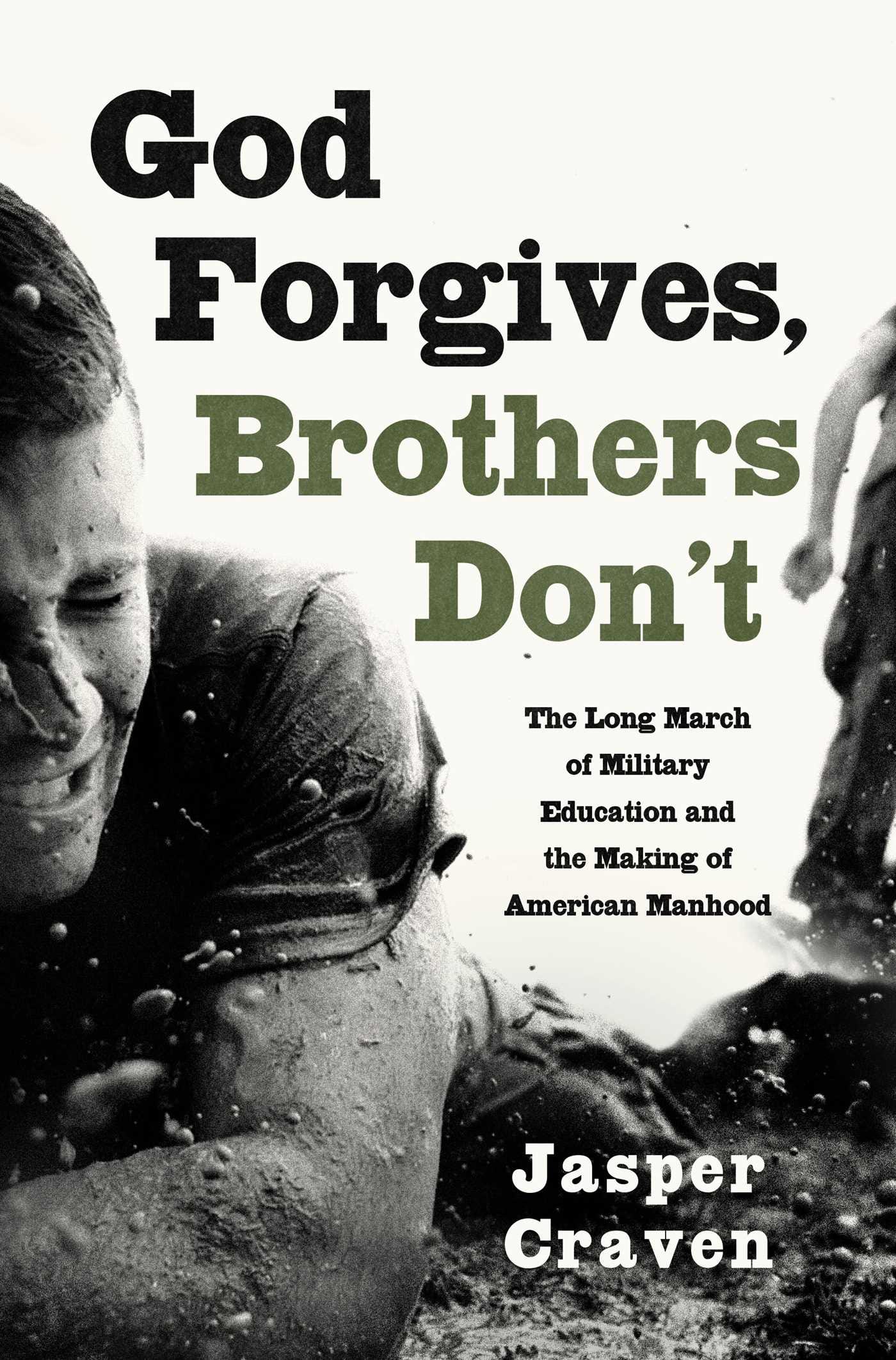
Dear Crew of the USS Tom Clancy, Please enjoy this guest post by our friend Jasper Craven. Jasper is author of the new book God Forgives, Brothers Don’t (https://www.simonandschuster.com/books/God-Forgives-Brothers-Dont/Jasper-Craven/9781668087190?gad_source=1&gad_campaignid=23865952718&gclid=EAIaIQobChMIgZjurYbVlAMVWCZECB1Q2Cw4EAAYASAAEgIhzvD_BwE) which is out this week from Simon & Schuster. He’s also been a friend for a long time. Buy his book! Support his work. Thank you for reading The Hunt for Tom Clancy. If you would like to become a paid subscriber, I would like that too. Matt Subscribe now GOD FORGIVES, BROTHERS DON’T• • The Aryan Brotherhood by Jasper Craven In 1981, a bunch of Texas inmates organized into a rigid, punishing platoon for purposes of protection and white power. Federal officials labeled them a neo-Nazi gang, but as one member insisted, “it’s really a brotherhood (https://www.newspapers.com/image/152757872/?terms=%22god%20forgives%2C%20brothers%20don%27t%22).” The Aryan Brotherhood of Texas, as the gang was known, ultimately grew throughout the federal prison system to more than 2,000 members. Along the way, it adopted a military-style chain of command that included soldiers, captains, lieutenants, and five all-powerful generals. Members were given a gang “patch” in the form of a swastika tattoo inked on their ribcages. When inmate Calvin Massey stole valor and got the tattoo before even being initiated, he was violently killed on camera by prospective member Virgil Barfield. Few other gangs were as fearsome. The Texas brotherhood engaged in gun-running, drug trafficking, burglary, robbery, and many grisly murders. In one June 2006 case, members kidnapped Robert McCartney, a 49-year-old fisherman, and slit his throat. Their motive: to scavenge parts from his old pick-up truck in order to repair their gang leader’s vehicle. McCartney was abducted from a resale shop, his throat was slit in a Wal-Mart parking lot, and his body was left to rot in a soybean field in Liberty County, Texas. The brotherhood was also suspected of slayings of law enforcement, including two North Texas prosecutors who had locked up a few brothers. In 2001, as a warped retaliation for 9/11, a recently freed member named Mark Anthony Stroman opened fire and killed two South Asian immigrants he had mistaken for Middle Eastern. Any whiff of defection from the brotherhood was viciously punished. One member accused of disloyalty had his tattoo “patch” burned off his body. Another was kidnapped and killed. Senior leaders kept his severed finger as a trophy. In 2008 (https://www.newspapers.com/image/1197381761/?terms=feds%20corralling%20texas%20gang), Aryan general Steven “Stainless” Cooke drove one of his soldiers, Scott “Arizona” Freeman, to a dusty road in Liberty County, Texas, and riddled his body with bullets. • • At the core of this violence was a warped plea for family and a yearning for masculine validation. “These people are into manly things, being tough,” observed (https://www.newspapers.com/image/1082743367/?terms=%22god%20forgives%2C%20brothers%20dont%22%20west%20point) one Texas prosecutor. “That’s why their punishments are beatdowns.” Like any family, loyalty was paramount, with all members declaring a “Blind Faith Commitment” to the gang’s constitution, which included an ominous omertà code: “God Forgives, Brother’s Don’t.”
In 1996, at the height of the Aryan Brotherhood of Texas’s power, another mostly white, intensely militant group of men quietly adopted the southern gang’s “God Forgives…” motto. The group was colloquially called the “Black Knights,” though most people knew them as the West Point football team. • • Rich Boening, a former ATF agent and retired Army Lieutenant Colonel who helped take down the Aryan brotherhood, told me he was deeply puzzled by West Point’s move. “Why would the team adopt something like that?” he said. “You wouldn’t think a white supremacist-type would go to West Point.” Certainly, the U.S. Army’s preeminent military academy has educated a diverse mix of cadets into the officer class, many of whom have comported themselves with honor. But the academy also holds dark memories regarding race. In the years leading up to the Civil War, West Point had been inexplicably divided into northern and southern companies. Many later defected from the Union and became Confederate officers. In 1861, the school briefly elevated P.G.T. Beauregard, an avowed secessionist, to the position of superintendent, thereby legitimizing him and his lost cause. Nine years earlier, West Pointer Robert E. Lee had been elevated to superintendent, a position he held for three years. Lee was a popular leader. His name long graced a road, a gate, a barracks, a childcare center, and an academic award on campus. In 2019, it was discovered that West Point’s science center featured a hooded figure holding a rifle and the words “KU KLUX KLAN.” The exact sequence of events that led West Point’s football team to adopt the Aryan motto in 1996 remains foggy. What’s clear is that the team saw a certain kinship with gang ideas and practices. As inside linebacker Stephen King told a reporter (https://www.newspapers.com/image/260574604/?terms=king&match=1) that year, “We’re not out there playing for parties and Suzy Q. We’re out there playing for the brothers on our team.” Since its founding in 1890, West Point football players have been considered the pinnacle of military manhood. At one point, 20 percent of all team alumni had achieved the rank of general. These distinguished alumni include “Stormin’” Norman Schwarzkopf, Omar Bradley, and George C. Marshall, who, in myth (https://www.marshallfoundation.org/articles-and-features/marshall-myth-west-point-football-player/), barked during World War II: “I need an officer for a secret and dangerous mission. Get me a West Point football player!” Footballers have long enjoyed special perks and administrative deference on campus. They operate their own semi-secret society within West Point’s already clandestine walls, engaging in unique initiation rites and other traditions. Often, these took the form of juvenile, harmless pranks. Ron Leshinski, a West Point tight end in the 1990s who went on to the NFL, told me about one of them: the “Atomic Sit-up.” It involves young players, who, while struggling to complete a full crunch due to resistance imposed by a taut towel, see the line go slack —at which point their heads are thrust into the sweaty ass of a linebacker. In the early 1990s, the team’s status was in question — thanks to five straight seasons with losing records. Many of their Division 1 challengers had recruited far better and bigger athletes, prompting the team to intensely recommit themselves to the school’s punishing culture. “The things that we could be good at were unity, discipline, and our aggressive approach,” Leshinski said. “We tried to be the national champions of toughness.” Mark Jones felt this shift acutely. In the summer of 1992, he followed his brother’s footsteps and became a “Black Knight.” It had been two years since West Point had nominally abolished hazing and other practices to “remove stress” from cadet life. The school had rebranded its initiation rites, changing “Beast Barracks” to the “Cadet Leader Development System.” One brigadier general boasted that it was “the most coherent and progressive system of overall leader development ever established at West Point.” Despite the rebrand, Mark found that the classic stressors were still there. He objected less to their intensity than to how unnecessary they felt in service of building leaders. “I would often question things at West Point,” he told me. He was especially vocal about his treatment on the football team. “It wasn’t about developing me as a person; it was just a bunch of bully stuff,” he said. Mark emerged from team-bonding events with fractured ribs and concussions. “It was bad, the kind of treatment where I lost consciousness multiple times,” he said. On numerous occasions, he was secured to an immovable object and beaten in the head. “I didn’t come here for this garbage,” he told himself, and repeatedly raised concerns with the coaching staff, including a future NFL coach. They did nothing, he said. Once players caught on to Mark’s disclosures about abuse, they sought to stop them. One night around 2 a.m., a drunken teammate banged on Mark’s dorm room door until he opened it, then tried to intimidate him into silence. On two other occasions after practice, teammates surrounded Mark in the locker room and subjected him to brutal hazing. Decades later, Mark still won’t detail exactly what happened, saying only that he endured intense sexual abuse and hasn’t fully recovered. In the aftermath of this torture, Mark became wildly anxious, struggled with memory issues, and was frequently haunted by nightmares. Often, only alcohol could put him to sleep. Certain triggers—like the smell of cleaning chemicals or the din of loud voices in an echoey space—made him unspool entirely. Mark’s dad had always preached the virtue of commitment, so Mark stayed on the team for part of another season. At some point, though, he couldn’t handle it anymore and quit West Point altogether. The year Mark was supposed to graduate, 1996, is when the team adopted “God Forgives, Brother’s Don’t” as their code. ** • • * In 2019, just months after Texas prosecutors indicted 50 leaders of the Aryan Brotherhood and other white power groups, ESPN enterprise reporter Dan Murphy arrived at West Point’s bucolic Hudson River campus to cover the team. The team was poised for a good season. During Murphy’s visit, one player mentioned the motto to him. In the moment, it seemed like a nice headline. After a basic Google search, however, Murphy discovered the slogan’s deep ties to the Aryan Brotherhood. Apparently, West Point had not read the news. For years, the motto had been plastered on merchandise and on a big black flag that the team ran out with during games. It was engraved on the insides of rings given to the team one year for winning the Armed Forces Bowl. Some players also had the saying inked on their bodies. Murphy told me that when he sought clarity on the matter, West Point officials offered “mixed signals.” The press team strenuously pushed for Murphy to omit any mention of the motto from his piece, with one spokesman vaguely explaining that “it is an internal thing.” After his ESPN report was published, West Point launched (https://www.espn.com/college-football/story/_/id/28232249/army-football-program-dropped-motto-white-supremacist-origin) a two-month internal investigation into the motto’s provenance. It found that its use was entirely “benign” and completely unrelated to “the views or beliefs of white supremacist groups.” The report’s executive summary traces the motto’s adoption to the 1991 pulp film “Stone Cold,” starring legendary NFL linebacker Brian Bosworth. West Point investigators attributed the adoption to the team’s reverence for Bosworth’s football credentials. This was a football story, they insisted, not a white-supremacist one. But “Stone Cold” is about a white-supremacist biker gang loosely based on the Aryan Brotherhood. One member says, “God Forgives, Brothers Don’t,” during a pivotal fight scene • • . The truth is that any closed culture – be it a sports team, a military platoon, or a prison gang – relies on overlapping ideas, such as loyalty, strength, and silence. Football has long been compared to the military, supposedly requiring the same brutal strength and discipline, as well as discretion about where the bodies are buried. Perhaps, then, it’s no surprise that the late New England Patriot and convicted murderer Aaron Hernandez sported a tattoo (https://www.espn.com/espn/wire?section=nfl&id=18356809) that read “God Forgives,” written backward so it was only legible when Aaron looked in a mirror. Ironically enough, Bosworth didn’t personally believe in omerta codes. As a player at Oklahoma University in the early 1990s, he sharply criticized the NCAA’s tight control over players, including its restrictions on pay. Later, after Bosworth was benched for steroid use at the Orange Bowl, he donned a T-shirt at the game that read: “NCAA: National Communists Against Athletes.” Bosworth also credibly asserted in his memoir that the Oklahoma football program of his day was overrun with aberrant behavior. He claimed that players freebased cocaine on game days, used steroids like aspirin, and that a teammate, Buster Rhymes, shot a machine gun on campus. “If you were a star on the University of Oklahoma football team, you could do just about anything you wanted,” Bosworth concluded (https://www.newspapers.com/image/404179607/?match=1&terms=Boz%2C%20the%20Author%3A%20Some%20Sooner%20Players%20Freebased%20Cocaine). Beyond the racialized undertones of West Point’s motto lies a clarifying truth: men operating within punitive, militia-style hierarchies never fully secure the feelings of family, security, and solidarity they seek. The brutal truth is that this is where some men go when there are no other options. The harder question may not be whether West Point consciously borrowed a slogan from a prison gang. It may be why these words—God Forgives. Brothers Don’t —felt instantly legible in both worlds. What hunger did these worlds answer? What promise did they make? In 2012, incarcerated Aryan Brotherhood member Jamie Lovell told The Houston Chronicle (https://www.newspapers.com/image/1196572647/) that true brotherhood was a key driver of his actions. “We aren’t all a bunch of murdering, racist savages as we are portrayed,” Lovell said. “There are always reasons; I just wish people would look at them all before judging.” Texas Ranger Brandon Bess begrudgingly agreed. “I honestly believe that for every one of them, it brought a sense of family they might not have had.”
God Forgives, Brothers Don’t is available here (https://www.simonandschuster.com/books/God-Forgives-Brothers-Dont/Jasper-Craven/9781668087190?gad_source=1&gad_campaignid=23865952718&gclid=EAIaIQobChMIgZjurYbVlAMVWCZECB1Q2Cw4EAAYASAAEgIhzvD_BwE) That’s it for this Memorial Day Dispatch from the Hunt for Tom Clancy.
Write a comment